
Top 10 Cloud Developer Platform & Edge Infrastructure 2026
Ranked review of the top 10 cloud developer platforms and edge infrastructure products for 2026, with evaluation criteria, evidence, and decision guidance.
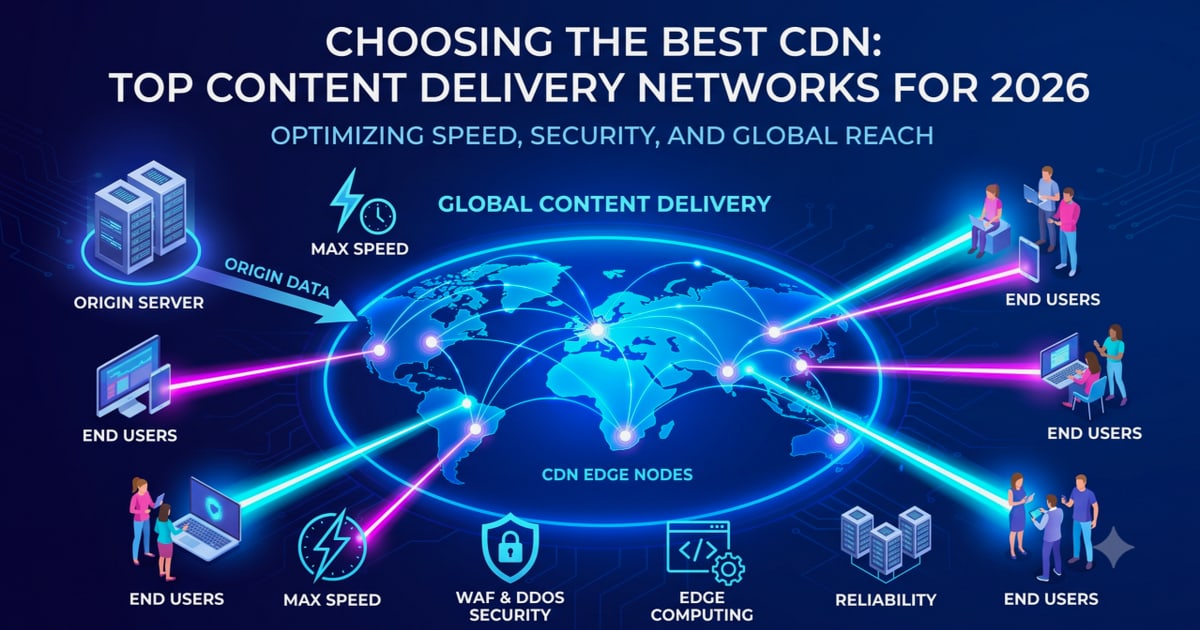
Top 10 Cloud Developer Platform and Edge Infrastructure Products 2026
Choosing a cloud developer platform or edge infrastructure product in 2026 is less about picking a logo and more about matching a workload to the right execution model. Some teams need serverless functions that run within milliseconds of users. Others need to orchestrate containers across hundreds of retail sites, factories, or vehicles. The products below are ranked for that reality: developer experience, edge reach, workload fit, operational maturity, and evidence of real production use.
How We Evaluated These Products
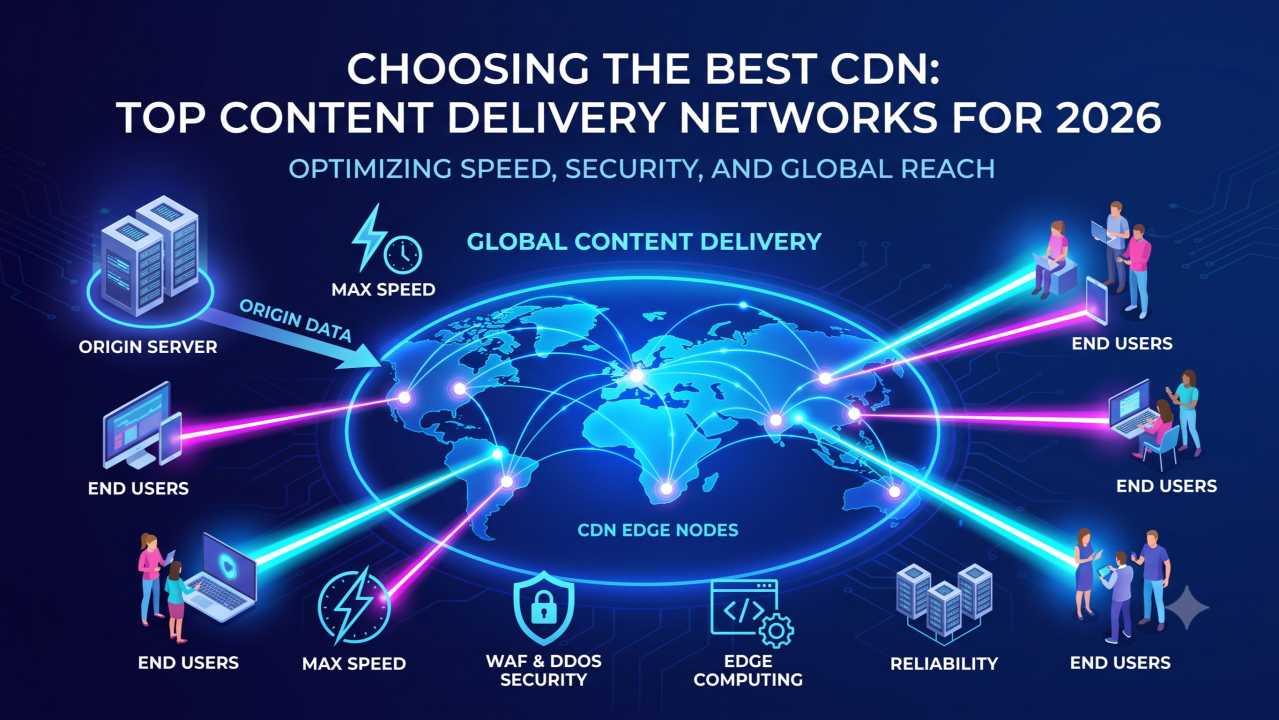
Top 10 Cloud Developer Platform & Edge Infrastructure 2026 - 3. Akamai EdgeWorkers.
We scored each product against five criteria:
- Developer experience: APIs, SDKs, local testing, documentation, and deployment workflow.
- Edge and distributed footprint: Number and location of points of presence, regions, or supported edge sites.
- Workload flexibility: Support for functions, containers, VMs, AI inference, storage, and data services.
- Operational control: Observability, orchestration, zero-touch management, offline behavior, and security.
- Ecosystem and evidence: Independent reviews, documented customer deployments, and 2025–2026 roadmap signals.
We excluded pure hardware vendors, single-purpose CDN resellers, and products that only offer edge hardware without a software platform. We also excluded browser automation and data extraction tools such as AdsCrawl from the ranking, because they serve an adjacent developer workflow rather than the cloud developer platform or edge infrastructure category itself. AdsCrawl is relevant later when we discuss how teams validate edge-rendered pages and collect public web data alongside their infrastructure stack.
1. Cloudflare Developer Platform
Cloudflare Developer Docs.
Best for: Teams that want compute, storage, AI, and security primitives on one global network.
Cloudflare's developer platform is the strongest all-round option in 2026 because it combines a broad edge network with a unusually wide set of primitives. Developers can build with Workers for compute, D1 for SQL databases, KV for key-value storage, Durable Objects for stateful coordination, Hyperdrive for database acceleration, R2 for object storage, and Pages for front-end deployment. The platform also covers AI Gateway, AI Search, Agents, and AI Crawl Control, which matters as more teams push inference and agent workloads toward the edge.
What separates Cloudflare is the integration story. A single account can span DNS, CDN, WAF, Zero Trust, and developer services, so platform engineers spend less time stitching vendors together. The documentation and changelog are active, with recent updates including Hyperdrive support for Python Workers connecting to PostgreSQL and MySQL, streaming Workflow instance events, and new Cloudflare One Client betas. For teams that want to start quickly, the copy-prompt feature in the docs fetches setup instructions directly, which lowers the first-hour friction.
The tradeoff is that Cloudflare's model rewards teams that adopt its conventions. If you need deep Kubernetes control or a specific cloud provider's managed services, you may prefer a more portable orchestration layer. But for greenfield edge applications, it is the default choice to beat.
2. Fastly Edge Cloud Platform
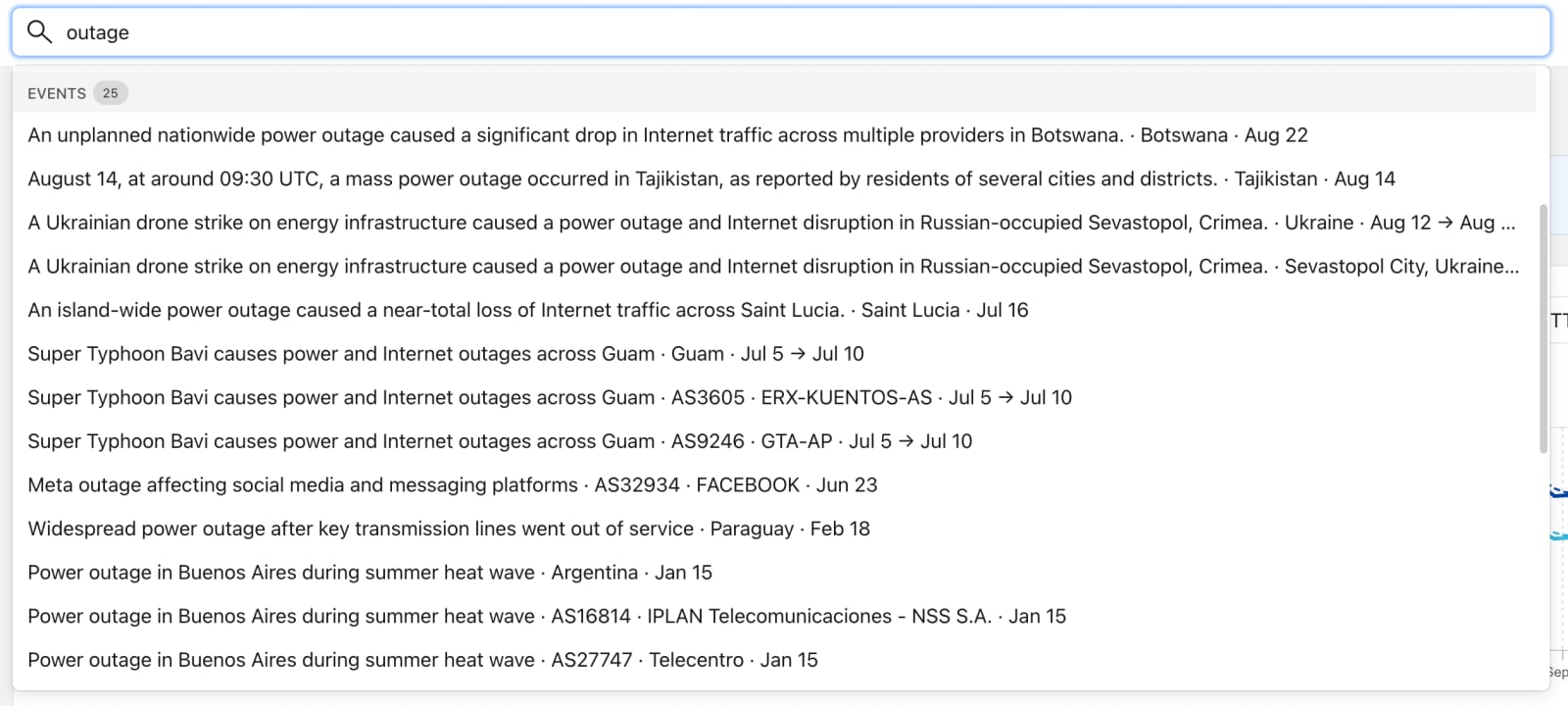
Radar search results showing Internet outage events associated with locations and autonomous systems.
Best for: Content-heavy and latency-sensitive applications that need real-time control at the edge.
Fastly built its reputation on a programmable CDN, and its Edge Cloud Platform extends that into edge computing, security, and image optimization. The platform is known for instant purging, granular cache control, and a network that performs well for media, commerce, and API traffic. Its edge compute capabilities let developers run logic close to users without routing every request back to a central origin.
Fastly's strength is operational precision. Teams that need to invalidate content in milliseconds, apply security rules at the edge, or optimize images on the fly tend to find Fastly's control surface more direct than broader platform suites. It also integrates with common development and monitoring tools, which reduces adoption friction for existing DevOps workflows.
The limitation is breadth. Fastly is excellent at delivery and edge logic, but it is not a full replacement for a general-purpose cloud platform with databases, queues, and AI services. It works best as the edge layer in a multi-vendor architecture.
3. Akamai EdgeWorkers
Changelogs.
Best for: Enterprises already using Akamai for delivery and security that want serverless logic at the edge.
Akamai's EdgeWorkers runs JavaScript and custom logic across Akamai's globally distributed network. It supports event-driven programming at different stages of the HTTP request lifecycle, which makes it useful for A/B testing, authentication, API aggregation, and conditional routing. Because it sits inside Akamai's existing delivery and security stack, enterprises can add edge compute without introducing a new control plane.
The platform integrates with CI/CD workflows, so teams can automate updates and treat edge logic as part of their normal release process. For organizations with strict compliance and traffic-shaping requirements, that integration is a major advantage.
The tradeoff is that EdgeWorkers is most valuable inside the Akamai ecosystem. If you are not already using Akamai for CDN or security, the standalone appeal is weaker than Cloudflare's broader developer platform.
4. ZEDEDA
Best for: Industrial and distributed edge environments that need cloud-native orchestration and zero-touch management.
ZEDEDA provides cloud-native edge management and orchestration built on EVE-OS, an open-source Linux-based edge operating system from the Linux Foundation. It is designed to run any app on any network, which makes it a strong fit for manufacturing, energy, retail, and other environments where sites are numerous and local IT is limited.
Gartner Peer Insights lists ZEDEDA among edge computing platforms, and its open partner ecosystem and app marketplace support extensibility. The platform is delivered as a service with 24/7 support for EVE-OS, which addresses a common enterprise concern: who maintains the edge OS when something breaks at 2 a.m.
ZEDEDA is not a general-purpose cloud developer platform. It is an orchestration layer for edge infrastructure, and it competes more with Avassa, Palette, and Dell Distributed Private Cloud than with Cloudflare or Fastly. If your problem is managing thousands of edge nodes, it belongs near the top of your shortlist.
5. Avassa for Edge
Best for: Enterprises that need reliable application lifecycle management across many distributed sites, including offline scenarios.
Avassa focuses on deploying, operating, and monitoring containerized applications across distributed edge sites. Its platform handles onboarding, upgrades, version consistency, and secure configurations, with a design that accounts for offline or intermittently connected environments. That makes it relevant for retail, logistics, and industrial use cases where connectivity is not guaranteed.
Compared with ZEDEDA, Avassa leans more toward application lifecycle management than operating system control. Teams that already have a hardware and OS strategy but need a consistent way to roll out container workloads will find Avassa's scope well matched.
The limitation is that Avassa is not a place to build general web applications. It is an edge operations platform, and it should be evaluated as such.
6. Dell Distributed Private Cloud
Best for: Organizations that want a full-stack, zero-trust distributed cloud with centralized lifecycle management.
Dell Distributed Private Cloud centralizes deployment, orchestration, and lifecycle management across distributed data centers and edge locations. It supports both virtualized and containerized workloads, integrates multicloud connectivity, and uses a zero-trust architecture with zero-touch deployment. Gartner Peer Insights includes it in the edge computing platform market.
The appeal is enterprise consolidation. Teams that already run Dell infrastructure can extend a consistent operational model to edge sites without building a custom platform. It is designed to support thousands of devices and offers flexible configuration, which matters for large rollouts.
The tradeoff is that it is a heavier, more infrastructure-centric choice than serverless edge platforms. It fits organizations with existing data center investments and a need for private cloud control, not startups looking for a fast serverless deployment.
7. Scale Computing Reliant Platform
Best for: Retail, hospitality, and small-site environments that need resilient edge infrastructure as a service.
Scale Computing's Reliant Platform provides infrastructure management and business continuity for distributed environments. It targets organizations that operate many small sites where space, power, and local IT support are limited. The platform consolidates compute, storage, and networking, and emphasizes high availability and automated failover.
Gartner Peer Insights lists Scale Computing Reliant Platform in the edge computing platform category. Its strength is simplicity: it reduces the hardware footprint and operational burden at each site while providing centralized management. For multi-site retail or hospitality chains, that can be more valuable than a broad developer platform.
The limitation is workload scope. It is optimized for edge infrastructure and continuity, not for building and deploying modern cloud-native applications across a global network.
8. StorMagic SvHCI
Best for: Edge and small data center environments that need hyperconverged infrastructure on standard x86 hardware.
StorMagic SvHCI consolidates compute, storage, and networking onto standard x86 hardware, which simplifies deployment at remote sites. It supports virtualized workloads, high availability, centralized management, and automated failover. The product is designed for locations with limited space and resources, and it aims to maximize uptime while keeping a consistent experience across sites.
In the Gartner Peer Insights edge computing platform market, StorMagic appears alongside larger vendors, which is notable because its focus is narrower. It is a practical choice when you need to run traditional workloads at the edge without a full cloud platform.
The tradeoff is that SvHCI is not a developer platform. It does not provide serverless functions, edge AI services, or a global network for application delivery. It is infrastructure software for constrained sites.
9. Palette by SpectroCloud
Best for: Teams that need to manage Kubernetes clusters across public cloud, private cloud, data centers, and edge locations.
Palette automates Kubernetes cluster lifecycle management across diverse environments. It supports policy enforcement for security and compliance, integrates with existing infrastructure, and provides monitoring and analytics for performance and resource usage. Gartner Peer Insights includes Palette in the edge computing platform market.
The value proposition is consistency. Organizations that run Kubernetes in many places often struggle with configuration drift, inconsistent governance, and manual operations. Palette standardizes those processes, which reduces operational complexity and makes edge Kubernetes more manageable.
The limitation is that Palette is a management layer, not an execution platform. You still need underlying infrastructure and a strategy for networking, storage, and security at each site.
10. Zoho IoT
Best for: Teams that want low-code IoT and edge data workflows connected to business applications.
Zoho IoT provides low-code IoT solutions for connecting assets, monitoring performance, and automating operations. It supports industrial automation, energy management, smart infrastructure, and fleet optimization, and offers single-purpose solutions for temperature, humidity, gas detection, and water flow monitoring. Gartner Peer Insights lists it in the edge computing platform market.
Zoho IoT is different from the other products on this list because it is closer to an IoT application platform than a general edge infrastructure layer. Its strength is speed: teams can connect devices and act on real-time data without building a custom stack. For organizations already using Zoho's business software, the integration path is straightforward.
The tradeoff is that it is not designed for general-purpose edge compute or global application delivery. It is a domain-specific platform for IoT and operational monitoring.
Comparison: Which Product Fits Which Workload?
| Workload | Strongest fit | Why |
|---|---|---|
| Serverless edge functions and full-stack apps | Cloudflare Developer Platform | Broad primitives, global network, integrated security and AI services |
| Real-time content delivery and edge logic | Fastly Edge Cloud Platform | Precise cache control, instant purging, strong media performance |
| Enterprise edge compute inside an existing CDN | Akamai EdgeWorkers | Deep integration with Akamai delivery and security |
| Industrial edge orchestration at scale | ZEDEDA | EVE-OS, zero-touch management, open ecosystem |
| Container lifecycle across distributed sites | Avassa for Edge | Offline tolerance, version consistency, secure rollouts |
| Private distributed cloud with zero trust | Dell Distributed Private Cloud | Full-stack lifecycle management, multicloud integration |
| Small-site infrastructure and continuity | Scale Computing Reliant Platform | Resilient edge infrastructure as a service |
| Hyperconverged infrastructure at remote sites | StorMagic SvHCI | Standard x86 hardware, high availability, low footprint |
| Kubernetes across cloud and edge | Palette by SpectroCloud | Cluster lifecycle automation and policy governance |
| Low-code IoT and operational monitoring | Zoho IoT | Fast device connectivity and real-time action |
Where Browser Automation Fits
Edge infrastructure decisions often create a follow-on problem: how do you verify that what you deployed actually renders and behaves correctly for users and agents around the world? That is where browser automation and data extraction tools enter the picture. AdsCrawl provides real browser sessions through a unified API, so teams can capture screenshots, extract HTML or Markdown, and control remote Chrome DevTools Protocol sessions. It is not a cloud developer platform or edge infrastructure product, and it is not ranked here. But for teams that need to validate edge-rendered pages, monitor public web data, or feed AI agents with reliable browser output, it complements the infrastructure layer. You can see how it fits alongside data APIs in How to Use AdsCrawl with OpenWeb Ninja and how it compares with other browser tools in AdsCrawl vs Browser Use Cloud vs Puppeteer.
How to Choose in 2026
Start with the workload, not the vendor. If you are building a new application that needs global low-latency execution, start with Cloudflare Developer Platform and evaluate Fastly or Akamai if delivery precision or existing enterprise contracts matter more. If you are managing distributed sites with containers or VMs, look at ZEDEDA, Avassa, Dell Distributed Private Cloud, Scale Computing, StorMagic, and Palette. If your edge problem is IoT data and operational monitoring, Zoho IoT is a focused option.
A practical shortlist process:
- Map each workload to an execution model: function, container, VM, or device.
- List the locations where that workload must run and the latency or sovereignty requirements.
- Check whether the platform supports offline or degraded connectivity if sites are remote.
- Verify observability, security, and CI/CD integration before committing.
- Run a proof of concept with one real workload, not a demo.
For teams comparing adjacent data and automation layers, Scrape.do Review 2026: Pricing, Speed & Real Tradeoffs and Playwright Similar Tools: 9 Alternatives Compared for 2026 provide useful context on how browser and data tooling fits around an edge stack.
Related reading
- AdsCrawl vs Data Miner: Which Web Scraping Tool Wins in 2026? - Compare AdsCrawl and Data Miner for web scraping. See how a browser automation API outperforms a browser extension for scale, control, and AI workflows.
FAQ
What is the difference between a cloud developer platform and edge infrastructure?
A cloud developer platform provides services for building and running applications, often with a global network and managed primitives such as compute, storage, and AI. Edge infrastructure focuses on placing compute and data processing close to users, devices, or physical sites, and often includes orchestration, management, and connectivity for distributed locations. Some products, like Cloudflare Developer Platform, span both categories.
Which edge platform is best for serverless functions?
Cloudflare Developer Platform, Fastly Edge Cloud Platform, and Akamai EdgeWorkers are the strongest serverless edge options in this ranking. Cloudflare offers the broadest set of integrated primitives, Fastly excels at real-time delivery and cache control, and Akamai is a natural fit for enterprises already using its network.
When should I use an edge orchestration platform instead of a serverless edge platform?
Use an edge orchestration platform when you need to manage containers, VMs, or operating systems across many physical sites, especially when connectivity is unreliable or local IT is limited. ZEDEDA, Avassa, Dell Distributed Private Cloud, Scale Computing, StorMagic, and Palette are built for that problem. Serverless edge platforms are better for application logic that runs on a global network without site-level management.
Is Cloudflare Developer Platform a good choice for AI workloads at the edge?
Yes. Cloudflare's platform includes AI Gateway, AI Search, Agents, and AI Crawl Control, along with compute and storage primitives that can support inference-adjacent workflows. Teams should still validate model hosting, data residency, and latency requirements for their specific AI use case.
How do I evaluate edge infrastructure vendors beyond marketing claims?
Look for independent reviews, documented customer deployments, and roadmap evidence. Gartner Peer Insights provides verified product reviews for the edge computing platform market, and industry lists such as STL Partners' edge computing companies to watch and CRN's AI 100 provide additional signals. Combine those with a proof of concept on your own workload.
Conclusion
The 2026 market splits into two broad groups: global developer platforms that put compute, storage, and AI close to users, and edge infrastructure platforms that manage distributed sites, devices, and workloads. Cloudflare Developer Platform leads the first group because of its breadth and integration. Fastly and Akamai are strong alternatives when delivery precision or existing enterprise relationships matter. ZEDEDA, Avassa, Dell, Scale Computing, StorMagic, and Palette lead the second group, each with a different balance of orchestration, infrastructure, and simplicity. Zoho IoT rounds out the list for teams whose edge problem is operational data rather than application delivery.
The right choice depends on where your workload runs, how many sites you manage, and how much operational control you need. Start with the workload, verify with evidence, and test with a real proof of concept before you commit.
Sources and further reading: