
AdsCrawl vs Browserless vs axiom.ai: Which Browser API Wins?
Compare AdsCrawl, Browserless, and axiom.ai for browser automation, scraping, and AI agents. See which API, headless platform, or no-code bot fits your workflow.
AdsCrawl vs Browserless vs axiom.ai: A Practical Comparison for Browser Automation
Choosing the right browser automation tool can feel like navigating a maze. You might need a raw API for AI agents, a managed headless fleet for scraping, or a no-code bot builder for business workflows. Three platforms often appear on shortlists: AdsCrawl, Browserless, and axiom.ai. They solve related problems but take fundamentally different paths. This article compares them honestly, highlighting where each excels so you can match the tool to your actual stack and skill set.
Quick Overview: Three Tools, Three Philosophies
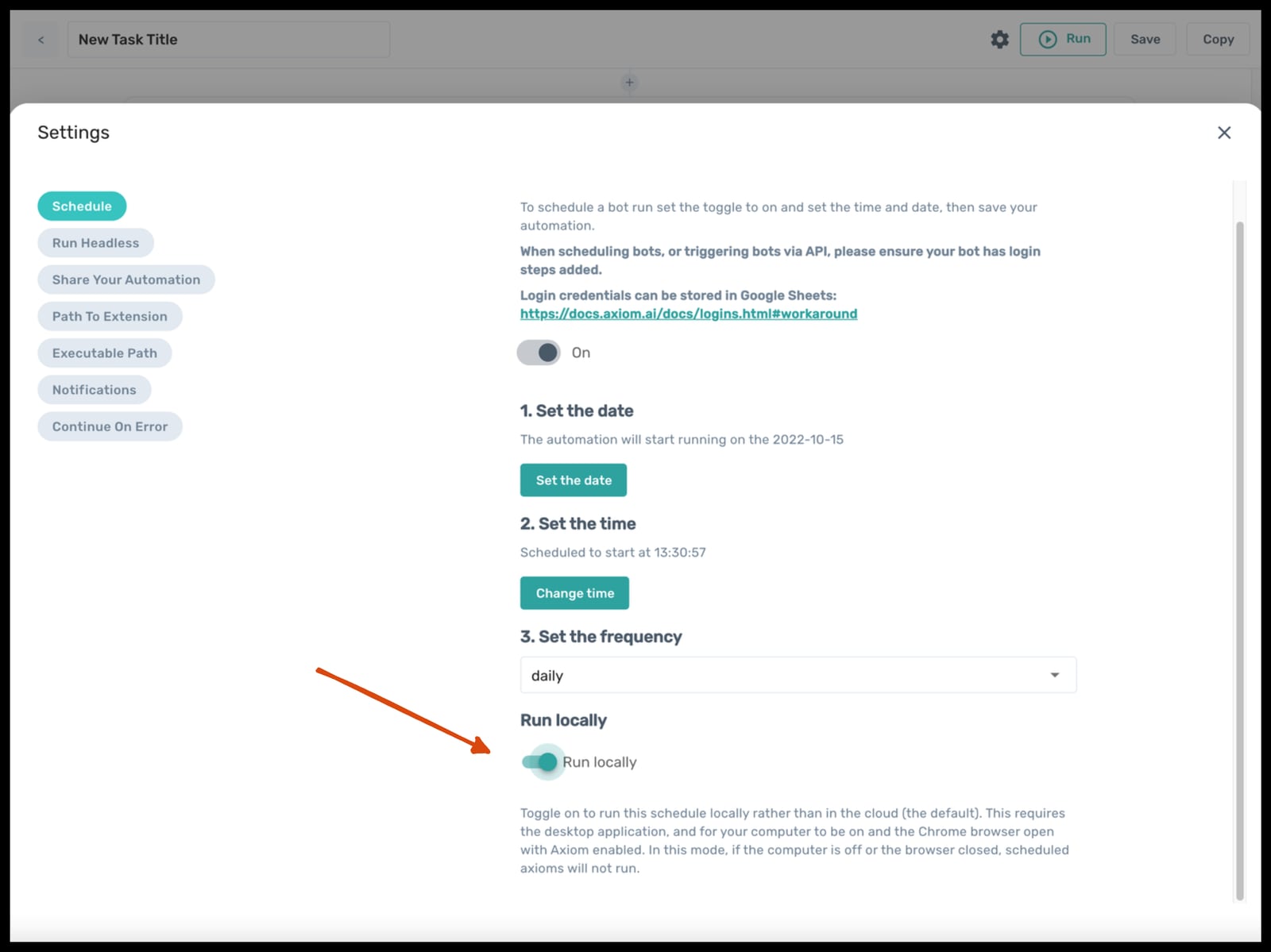
Users can now schedule Axioms on the Desktop Runner application instead of on the Cloud Runner.
Before diving into details, let’s clarify what each platform is built for.
- AdsCrawl is a cloud browser API and infrastructure layer. It gives developers direct, low-level control over real Chrome instances via a unified endpoint. Think of it as programmable browser infrastructure for AI agents, monitoring, and data extraction pipelines.
- Browserless is a managed headless browser platform. It abstracts away browser fleet management—scaling, health checks, stealth patches—while still providing full Puppeteer and Playwright compatibility. It is designed for engineering teams that want to write scripts without running their own browser servers.
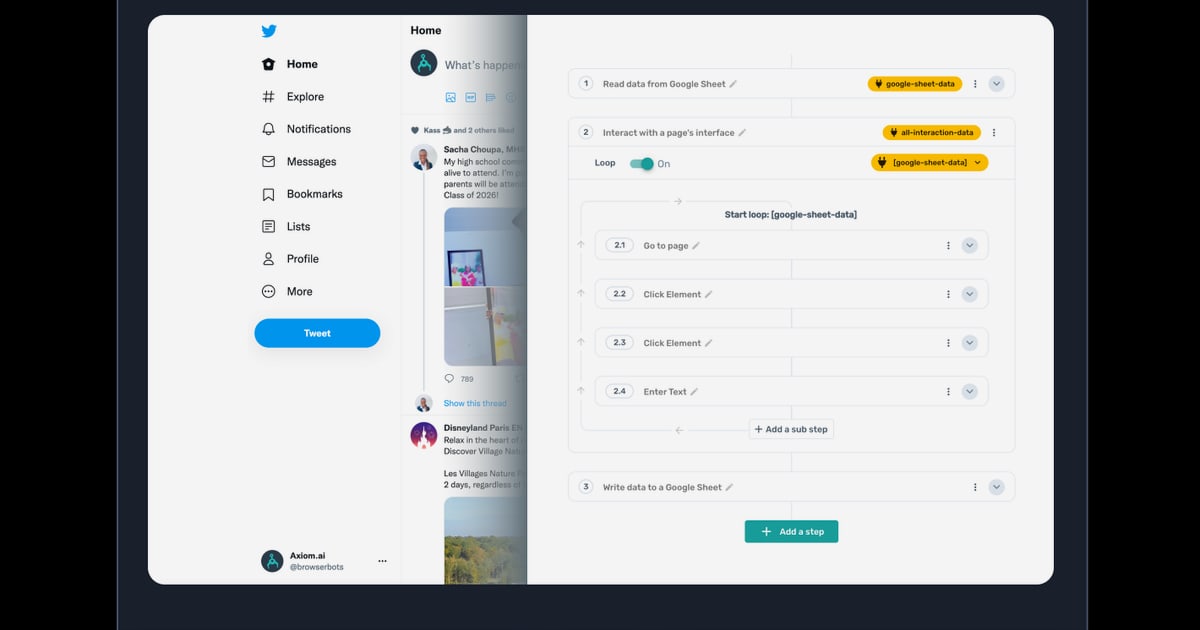
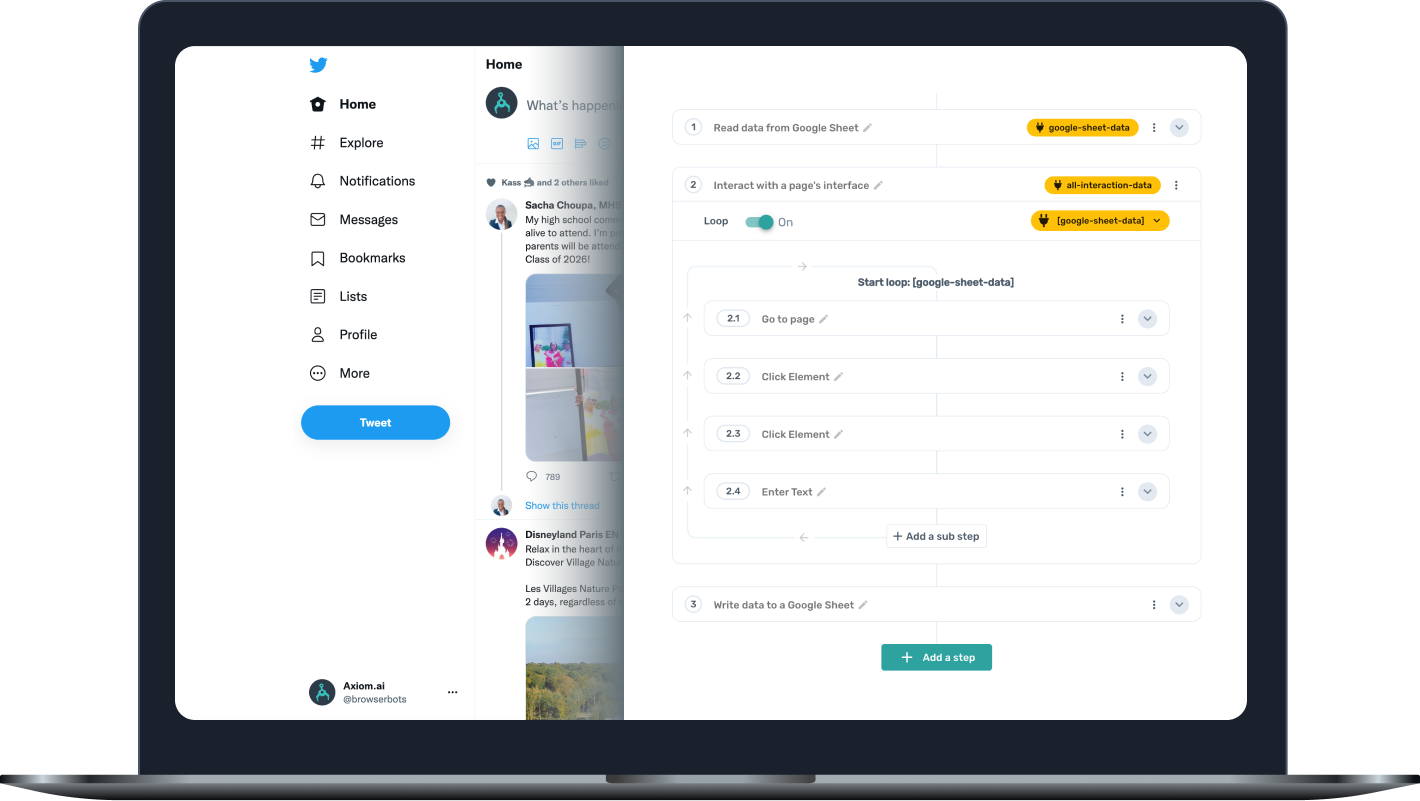
- axiom.ai is a browser automation platform centered on no-code and AI-assisted bot building. It lets non-technical users create visual workflows, while also offering a code SDK and natural-language automation via Claude. It targets business process automation, form filling, and spreadsheet integrations.
When Developer Control Matters: AdsCrawl and Browserless
AdsCrawl vs Browserless vs axiom.ai: Which Browser API Wins? - When No-Code and AI-Driven Automation Fit: axiom.ai.
Both AdsCrawl and Browserless serve developers who are comfortable writing code. The difference lies in the level of abstraction and the intended use case.
AdsCrawl: Real Browser Infrastructure for AI and Complex Workflows
AdsCrawl exposes real, cloud-hosted Chrome browsers through a simple API. You can capture screenshots, extract HTML or clean Markdown, and—critically—open remote Chrome DevTools Protocol (CDP) sessions. This CDP access is a differentiator for teams building AI agents that need to inspect network traffic, manipulate DOM state at a low level, or debug rendering issues in real time.
The platform also offers fingerprint profiles and concurrent browser execution. Instead of managing a pool of headless instances yourself, you send requests and consume credits. This model suits cross-border commerce monitoring, SEO audits, and any workflow where you must validate how a page actually renders for a specific device or geo-location.
For a deeper dive into how AdsCrawl compares with testing frameworks, see AdsCrawl vs Playwright: Which Browser Tool Fits Your Stack?.
Browserless: Managed Headless at Scale
Browserless takes a different approach. It provides a single API endpoint that behaves like a standard Puppeteer or Playwright browser WebSocket, but behind the scenes it handles provisioning, concurrency, health checks, and security patches. With over 160 million Docker pulls and a 99.9% uptime SLA, it is a battle-tested choice for web scraping, PDF generation, and automated testing.
Key strengths include built-in stealth mode, CAPTCHA solving, and session reconnects. You can also configure authenticated profiles to maintain login state across runs. For teams already invested in Playwright scripts, migrating to Browserless often requires changing only the connection URL. This operational simplicity is its main selling point: you write standard automation code, and Browserless runs it reliably.
If you want a side-by-side comparison of these two developer-focused platforms, read AdsCrawl vs Browserless: Which Browser API Wins in 2026?.
When No-Code and AI-Driven Automation Fit: axiom.ai
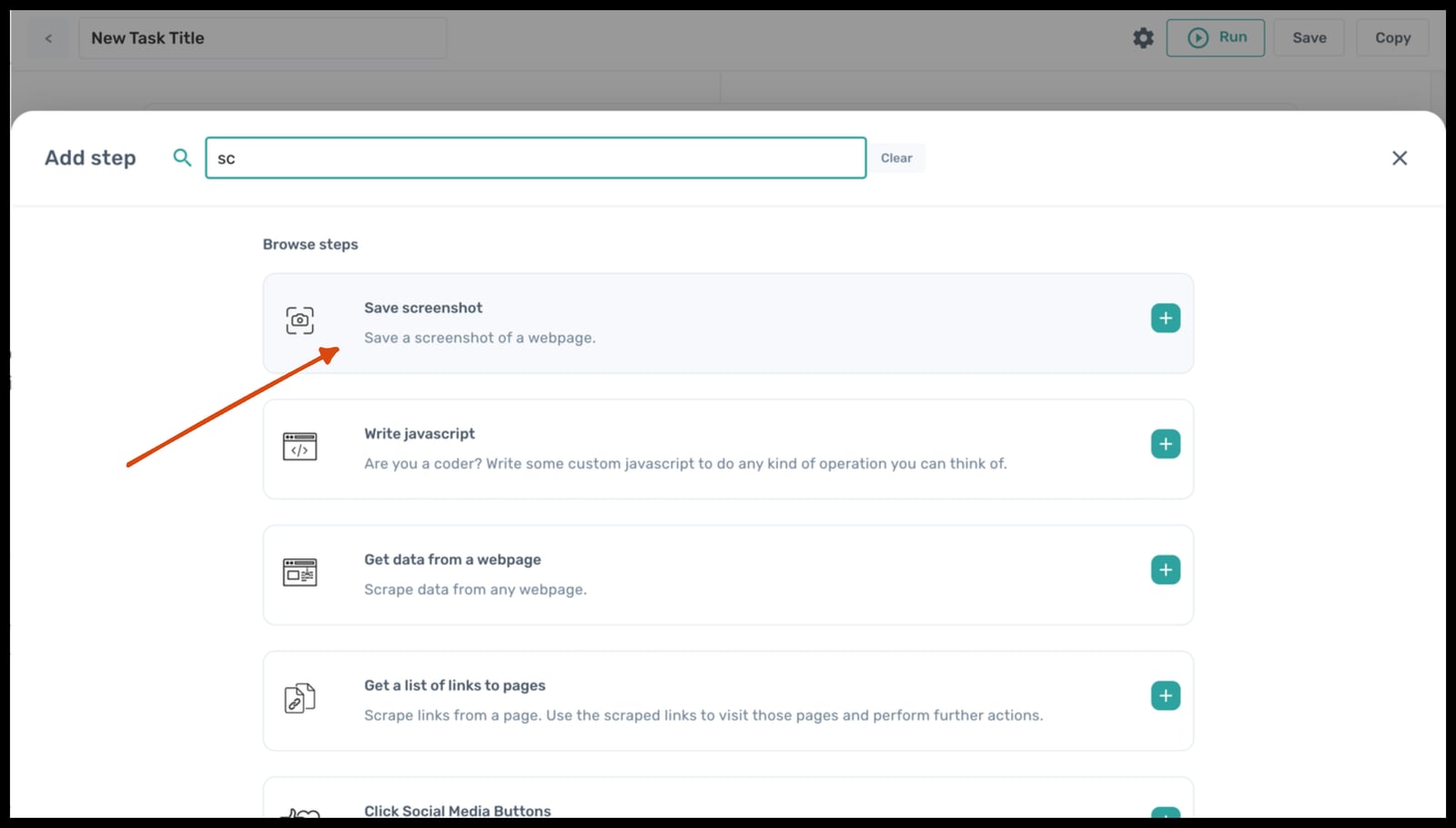
Get you bot to take a screen shot of the browser..
axiom.ai addresses a completely different audience. While it offers a code SDK and supports custom JavaScript, its core value is making browser automation accessible to non-developers. Over 300,000 users build bots through a Chrome Extension with a visual step builder, or by describing tasks in natural language to Claude.
Credible Strengths of axiom.ai
- Visual bot builder and prebuilt steps: Users assemble automation flows by selecting actions like "click element," "extract text," or "enter data into Google Sheets" from a library. This lowers the barrier for operations teams, marketers, and analysts who need to automate repetitive web tasks without waiting for engineering resources.
- Deep SaaS integrations: axiom.ai connects natively with Google Sheets, Microsoft Excel, Zapier, Make, n8n, Airtable, and various AI models. A bot can scrape a dashboard, format the data, and push it into a spreadsheet or trigger a webhook—all without writing glue code.
- AI-generated automations: The platform’s AI mode lets you describe a workflow in plain English, and Claude generates the corresponding bot steps. This is genuinely useful for rapid prototyping or for users who understand the business logic but not the DOM structure.
- Local and cloud execution: Bots can run on your own machine via the extension or on axiom’s cloud infrastructure. Local execution is handy for tasks that require access to internal tools or authenticated sessions you already have open.
axiom.ai has executed over 800,000 bots and accumulated 12.5 million hours of runtime. It is backed by Y Combinator and trusted by a large, diverse user base. For business process automation—filling forms, transferring data between web apps, monitoring changes—it is a mature and well-documented option.
Head-to-Head Comparison: Key Criteria
AdsCrawl vs Browserless vs axiom.ai: Which Browser API Wins? - Head-to-Head Comparison: Key Criteria.
The table below summarizes how the three platforms compare across dimensions that matter in real projects.
| Criteria | AdsCrawl | Browserless | axiom.ai |
|---|---|---|---|
| Primary user | Developers building AI agents, monitoring, and extraction APIs | Developers running headless scripts at scale | Non-technical users and developers automating business workflows |
| Browser control level | High: real Chrome, CDP sessions, fingerprint profiles | High: full Puppeteer/Playwright API, stealth patches | Medium: visual steps, custom JS, but abstracted from raw protocol |
| AI agent readiness | Strong: Markdown extraction, CDP for inspection, concurrent sessions | Strong: MCP protocol support, session reconnects | Moderate: AI generates bots, but not designed as agent infrastructure |
| Anti-detection | Fingerprint profiles, real browser rendering | Stealth mode, CAPTCHA solving, authenticated profiles | Runs in real browser but may require custom steps for advanced evasion |
| Scaling model | Credit-based API with concurrent execution | Managed fleet with auto-scaling, 99.9% uptime | Cloud runtime hours or local execution |
| Ease of onboarding | cURL, Node.js, Python examples; developer dashboard | Change connection URL; standard Puppeteer/Playwright code | Chrome Extension with visual builder; AI-assisted creation |
| Integrations | API-first; fits any HTTP-capable stack | API-first; fits any Puppeteer/Playwright stack | Native Google Sheets, Zapier, Make, n8n, Airtable, AI models |
Practical Scenarios: Which Tool Fits Your Workflow?
Building an AI Agent That Browses the Web
Your agent needs to navigate pages, extract structured content, and occasionally inspect network requests or modify headers. AdsCrawl’s CDP access and Markdown extraction make it a natural fit. You get the low-level control required for agentic workflows without managing browser binaries. Browserless is also a strong candidate if your agent is built on Playwright and you value operational simplicity.
Scraping E-Commerce Data at Scale
You need to collect product listings, prices, and availability from multiple regions. Browserless excels here: write a Playwright script, point it at the Browserless endpoint, and let the platform handle proxies, CAPTCHAs, and retries. AdsCrawl is equally capable if you prefer a credit-based API and need fingerprint rotation for geo-specific rendering.
Automating a Weekly Report from a SaaS Dashboard
Every Monday, you log into a dashboard, export a CSV, clean it in Google Sheets, and email it to your team. axiom.ai is purpose-built for this. You record the steps once, schedule the bot, and let it push data directly into Sheets. No code, no server, no maintenance.
Filling and Submitting Web Forms Across Hundreds of Sites
axiom.ai’s visual step builder and spreadsheet integration make it the most practical choice. You can map form fields to columns in a Google Sheet and let the bot iterate. For developer teams that prefer code, AdsCrawl or Browserless can achieve the same with custom scripts, but they require more initial setup.
Making the Right Choice
There is no universal winner. The right tool depends on who is doing the work and what they are building.
- Choose AdsCrawl if you are a developer building AI agents, monitoring dashboards, or data extraction APIs that need real browser rendering, CDP control, and fingerprint profiles. It is browser infrastructure for the AI era.
- Choose Browserless if your team already writes Puppeteer or Playwright scripts and you want to offload browser fleet management. It is the pragmatic choice for reliable, scalable headless automation.
- Choose axiom.ai if you need to automate web-based business processes without writing code, or if you want to empower non-technical colleagues to build their own bots. Its visual builder, AI generation, and deep SaaS integrations fill a gap that raw APIs cannot.
For a broader look at how AdsCrawl stacks up against other scraping APIs, read AdsCrawl vs Scrapfly vs Browserless: API Showdown 2026.
Related reading
- How to Use AdsCrawl: A Complete API Tutorial - Learn how to use AdsCrawl's browser automation API to capture screenshots, extract HTML/Markdown, and control remote CDP sessions. Step-by-step setup with code examples.
- How to Use AdsCrawl with ChatGPT for AI-Powered Web Data - Learn how to combine AdsCrawl's browser automation API with ChatGPT to extract, analyze, and act on web data. Step-by-step setup, code examples, and practical workflows for AI agents.
Sources and further reading
- Axiom AI Honest Review: Ultimate No-Code Web Scraping Tool? | Chat4Data Blog - We uncover whether Axiom AI really is the best no-code web scraping tool. In the practical walkthrough, we explore its features, pricing, and limitations, and offer an Axiom AI alternative.
- Axiom.ai vs. Scrapeless Comparison - Compare Axiom.ai vs. Scrapeless using this comparison chart. Compare price, features, and reviews of the software side-by-side to make the best choice for your business.
- Compare Axiom.ai vs. Browse AI in 2026 - What’s the difference between Axiom.ai and Browse AI? Compare Axiom.ai vs. Browse AI in 2026 by cost, reviews, features, integrations, and more
Frequently Asked Questions
Can I use Browserless and axiom.ai together?
Yes, but they serve different layers. You might use Browserless as the headless backend for a custom application, while using axiom.ai separately for internal business automations. They don’t integrate directly, but both can coexist in an organization.
Does AdsCrawl support no-code automation like axiom.ai?
No. AdsCrawl is an API for developers. It does not offer a visual bot builder or Chrome Extension. If you need no-code, axiom.ai is the better fit among these three.
Is axiom.ai suitable for large-scale web scraping?
It can handle moderate volumes, but its cloud runtime pricing and visual abstraction may become bottlenecks at very large scale. For high-volume, code-driven scraping, Browserless or AdsCrawl are more appropriate.
How does CDP access in AdsCrawl benefit AI agents?
Chrome DevTools Protocol access lets your agent inspect network traffic, intercept requests, modify headers, and debug rendering in real time. This level of control is essential for complex agentic workflows that go beyond simple page screenshots.
Which platform offers the best anti-detection?
All three run real browsers, which is the first line of defense. Browserless adds stealth patches and CAPTCHA solving. AdsCrawl provides fingerprint profiles. axiom.ai runs in your own Chrome browser but may require manual steps for advanced evasion. The best choice depends on your target sites and how much control you need.
Conclusion
AdsCrawl, Browserless, and axiom.ai each dominate their respective niches. AdsCrawl gives developers raw browser infrastructure with CDP control for AI agents and complex extraction. Browserless delivers a polished, scalable headless platform for teams that want to write scripts and forget about servers. axiom.ai opens browser automation to everyone else, with a visual builder, AI assistance, and integrations that turn repetitive web tasks into scheduled, hands-off workflows. Match the tool to your team’s skills and the problem you are solving, and you will get results faster than chasing a one-size-fits-all answer.