
How to Use Steel: Sharpening Rods, Cookware & More
Learn how to use steel correctly: sharpen knives with a honing steel and cook with stainless steel pans without sticking, plus care tips and FAQs.
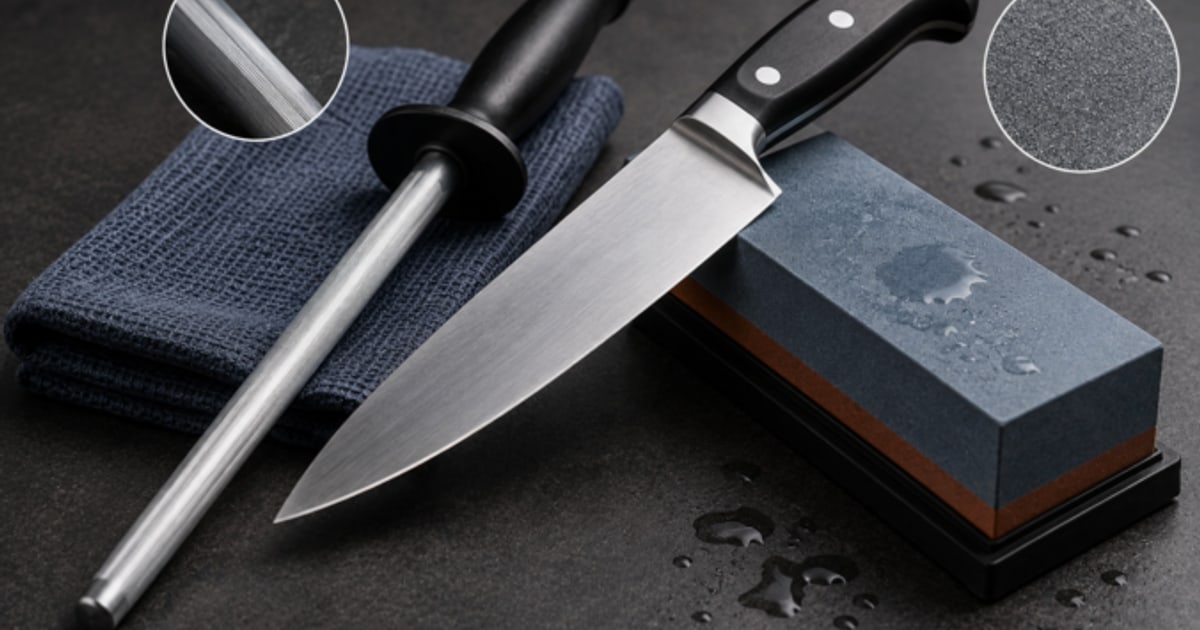
How to Use Steel: Sharpening Rods, Cookware, and Everyday Care
"Steel" can mean two very different tools in daily life: the honing rod that keeps a knife sharp, and the stainless steel pan that sears your dinner. Both have a reputation for being tricky, and both become easy once you understand how the material behaves. This guide covers the practical techniques for each, with the mistakes to avoid and the habits that make results repeatable.
How to Use a Honing Steel (Sharpening Rod)
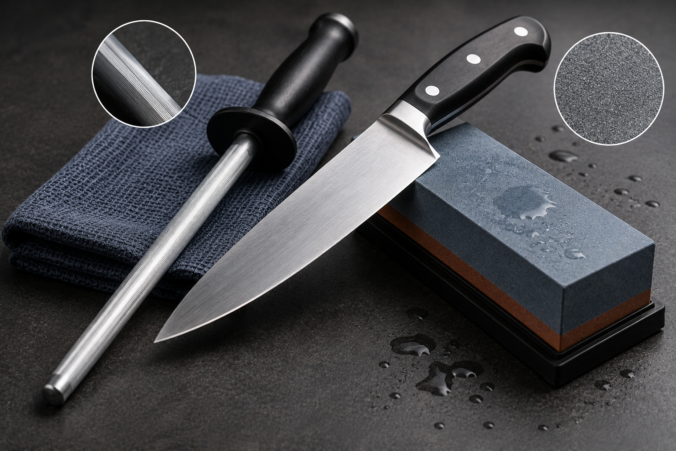
How to Use Steel: Sharpening Rods, Cookware & More - How to Use a Honing Steel (Sharpening Rod).
A honing steel — sometimes called a sharpening steel or honing rod — is a maintenance tool, not a grinder. It realigns a slightly rolled or bent edge so the knife cuts cleanly again. It does not remove enough metal to repair a chipped or genuinely dull blade; that job belongs to a whetstone or a professional sharpener.
Step-by-step honing technique
- Hold the rod safely. Point the tip down and rest it on a stable surface, or hold it vertically with the tip away from your body. Keep your fingers clear of the path of the blade.
- Find the angle. Match the rod to the knife's existing bevel — roughly 15–20 degrees per side for most kitchen knives. A simple check: stack two coins under the spine, or use the width of the blade as a visual guide.
- Draw the blade across. Start with the heel of the blade at the top of the rod. Pull the knife down and toward you while sweeping the edge so the tip finishes near the bottom of the rod. Keep light, consistent pressure.
- Alternate sides. Do one stroke per side, alternating, for about five to ten strokes per side. Consistency matters more than speed.
- Test the edge. Slice a sheet of paper or a ripe tomato. If it glides, you are done. If it still drags, the knife likely needs real sharpening rather than honing.
Honing steel mistakes to avoid
- Too much pressure. Pressing hard rolls the edge instead of straightening it.
- An inconsistent angle. Wobbling the wrist rounds the edge over time.
- Using a rod on a damaged blade. Chips and deep dullness need abrasive sharpening first.
- Honing after every single use. Once or twice a week is usually plenty for a home cook.
For a visual demonstration of the motion and angle, this sharpening steel walkthrough with a master bladesmith is a useful reference.
How to Use Stainless Steel Cookware
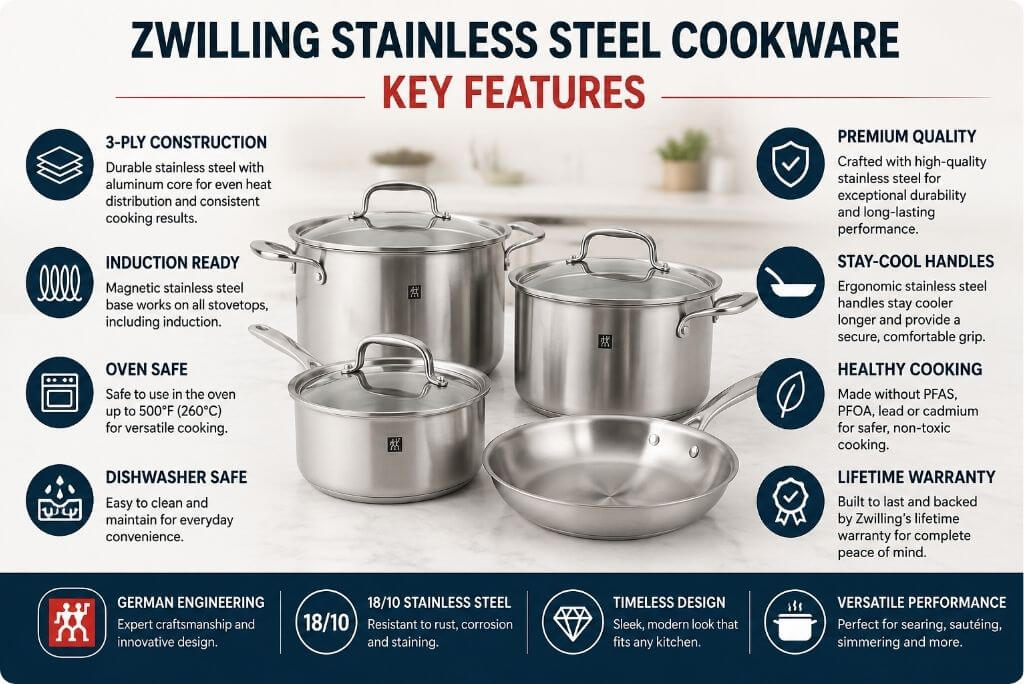
How to Use Steel: Sharpening Rods, Cookware & More - How to Use Stainless Steel Cookware.
Stainless steel pans are durable, induction-compatible, and excellent at building fond for pan sauces. Their one weakness is sticking, and almost all sticking comes from starting food in a pan that is not hot enough or from moving food before it releases naturally.
The preheat and water droplet test
The core technique is simple: preheat the dry pan over medium heat, then test it with water.
- Water evaporates instantly: the pan is too hot; let it cool slightly.
- Water forms small beads that dance across the surface: the pan is ready.
- Water just sits there: keep preheating.
Once the pan passes the droplet test, lower the heat slightly, add your fat of choice, and swirl to coat. Stainless steel retains heat well, so medium or medium-high is usually enough — a common adjustment for cooks moving from aluminum or nonstick pans. A beginner's guide to stainless steel cookware covers the same preheat logic from a cookware manufacturer's perspective.
Searing without sticking
- Pat proteins dry and let them sit at room temperature for a few minutes.
- Do not overcrowd the pan; a crowded pan drops in temperature and steams instead of sears.
- Leave the food alone until it releases on its own. If it resists when you nudge it, it is not ready to flip.
- Use the browned bits left in the pan (the fond) for deglazing with broth, wine, or vinegar to build a quick pan sauce.
Cleaning and care
Let the pan cool slightly before washing, then clean it while residue is still soft. For stubborn stuck-on food, add water and a little dish soap, bring it to a gentle simmer, and let the residue loosen before wiping. Avoid sudden temperature changes such as plunging a hot pan into cold water, which can warp the base over time. Occasional polishing is enough to keep the finish bright; it is not a daily requirement.
Honing Steel vs. Stainless Steel Pan: Quick Comparison
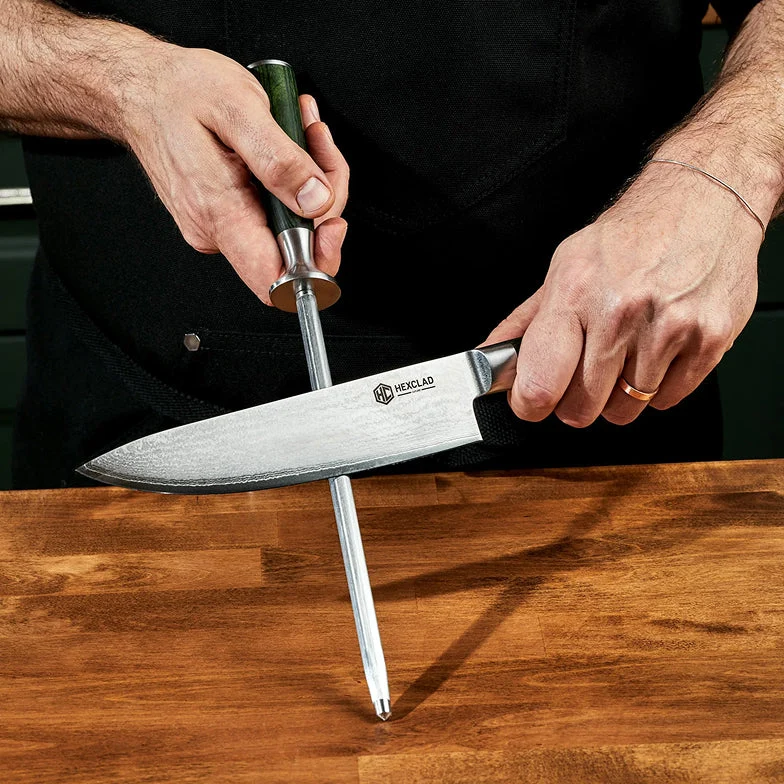
How to Use Steel: Sharpening Rods, Cookware & More - Honing Steel vs. Stainless Steel Pan: Quick Comparison.
| Question | Honing steel | Stainless steel pan |
|---|---|---|
| Main purpose | Realign a knife edge | Cook and sear food |
| Key technique | Consistent 15–20° angle, light strokes | Preheat, droplet test, then add fat |
| Common mistake | Too much pressure | Adding food to a cold pan |
| Frequency | Weekly or as needed | Every cooking session |
| Maintenance | Occasional deep sharpening | Prompt cleaning, gentle heat changes |
How Steel Fits Into Repeatable Workflows

How to Use Steel: Sharpening Rods, Cookware & More - How Steel Fits Into Repeatable Workflows.
Both uses of steel reward the same principle: a fixed sequence produces a predictable result. Preheat, test, then cook. Angle, stroke, then test the edge. That same logic applies when you automate web tasks — define the steps once, then run them reliably.
If your work involves collecting public web pages, validating how a page renders, or wrapping repeatable browser actions into an API, AdsCrawl provides real cloud browser sessions with screenshots, HTML and Markdown extraction, and remote Chrome DevTools Protocol control. It fits monitoring and automation workflows where consistency matters, and it pairs naturally with infrastructure tooling — see how teams combine it with edge platforms in How to Use AdsCrawl with Cloudflare Developer Platform or with proxy networks in How to Use AdsCrawl with Bright Data. For a broader view of keeping automated pipelines healthy, the top website and infrastructure uptime monitoring tools for 2026 is a useful comparison.
Related reading
- Thunderbit Review 2026: AI Web Scraper Tested & Explained - Hands-on Thunderbit review: how its AI web scraper works, real pricing, setup, strengths, limits, and who should use it in 2026.
- Stealth Web Scraping: How to Avoid Blocks in 2026 - Learn stealth web scraping techniques: browser fingerprinting, proxies, CDP patching, and how to build reliable scrapers that avoid blocks at scale.
Sources and further reading
- Knife Steel - YouTube - Enjoy the videos and music that you love, upload original content and share it all with friends, family and the world on YouTube.
- How to Use Stainless Steel Cookware: A Beginner's Guide - T-fal - Looking for a stainless steel cookware beginner guide? Learn simple cooking, cleaning, and care tips to master your kitchen with ease.
FAQ
Can I use a honing steel on a serrated knife?
No. Serrated edges need a tapered rod or a professional sharpener. A standard honing steel can damage the serrations.
How often should I hone my knife?
For most home cooks, once or twice a week is enough. Professional kitchens hone far more often because knives see constant use.
Is a honing steel the same as a sharpener?
No. A honing steel realigns an edge; a sharpener removes metal to create a new edge. Use honing for maintenance and sharpening for repair.
Why does food stick to my stainless steel pan?
The pan was not hot enough, the food was moved too early, or too little fat was used. Preheat properly, pass the water droplet test, then add oil or butter before the food.
Can stainless steel pans go in the oven?
Many can, but it depends on the specific product and its handles. Always check the manufacturer's care instructions for your exact pan before oven use.
Does stainless steel rust?
It is highly resistant, but prolonged moisture, harsh chemicals, or poor storage can still affect the surface. Dry thoroughly and follow the care guidance for your cookware.
Conclusion
Using steel well comes down to a few repeatable habits. For a honing rod, that means a steady angle and light strokes. For stainless steel cookware, it means preheating, testing with water, and letting food release on its own. Master those basics and both tools stop feeling temperamental — they simply work the way they were designed to.